

Nuremberg Christmas Market Guide 2026: Best Things to Do, What to Eat, What to Buy & Smart Travel Tips
A practical, detailed, and experience-driven guide to visiting one of Europe’s most iconic Christmas markets — with smart planning advice, food tips, shopping ideas, itinerary suggestions, and common mistakes to avoid.

- Why Nuremberg’s Christmas Market Feels Different
- What the Christkindlesmarkt Is Known For
- Best Time to Visit in 2026
- How to Get There
- Where to Stay
- What It Feels Like on Arrival
- Best Things to Do at the Market
- What to Eat and Drink
- What to Buy
- Family Trip or Romantic Getaway?
- Mistakes to Avoid
- Budget and Cost Planning Tips
- Suggested Itineraries
- Experience-Based Advice
- FAQ
- Final Thoughts
Why Nuremberg’s Christmas Market Feels Different
Nuremberg has no shortage of visual charm, but what makes its Christmas market memorable is not only the postcard beauty. It is the depth of tradition underneath the lights. Plenty of markets across Europe look festive. Far fewer feel anchored in a long-running local identity. In Nuremberg, you are not walking through something that was recently designed for tourism alone. You are stepping into a seasonal ritual that has become part of the city’s cultural personality.
That difference matters more than many first-time visitors expect. The market does not rely on novelty to impress you. It wins you over through atmosphere, repetition, and detail. The red-and-white striped stalls, the scent of spices and grilled sausages, the feeling of cold air against warm mugs, the church backdrop, the old-town setting, and the dense concentration of holiday traditions all work together. Even before you buy anything, the place already feels full.
Another reason it stands out is that it offers more than surface-level Christmas aesthetics. Nuremberg’s market has emotional texture. You can enjoy it as a casual traveler who just wants pretty photos and seasonal food, but you can also appreciate it as someone interested in heritage, craftsmanship, German Christmas culture, and the way cities build identity through annual events. That layered quality is what keeps it from feeling generic.
For many travelers, the real surprise is how complete the experience feels. You are not just walking stall to stall. You are observing how a whole city leans into Advent. The market becomes not only a shopping stop, but also a mood, a rhythm, and a reason to slow down. That is why even people who visit multiple Christmas markets often still speak about Nuremberg with a different level of affection.
What the Christkindlesmarkt Is Known For
The Nuremberg Christkindlesmarkt is one of Germany’s most famous Christmas markets and one of the best-known in Europe. Official tourism sources describe it as one of the oldest and most famous Christmas markets in the world, with roots dating back centuries and an established modern seasonal schedule in late November through Christmas Eve. :contentReference[oaicite:1]{index=1}
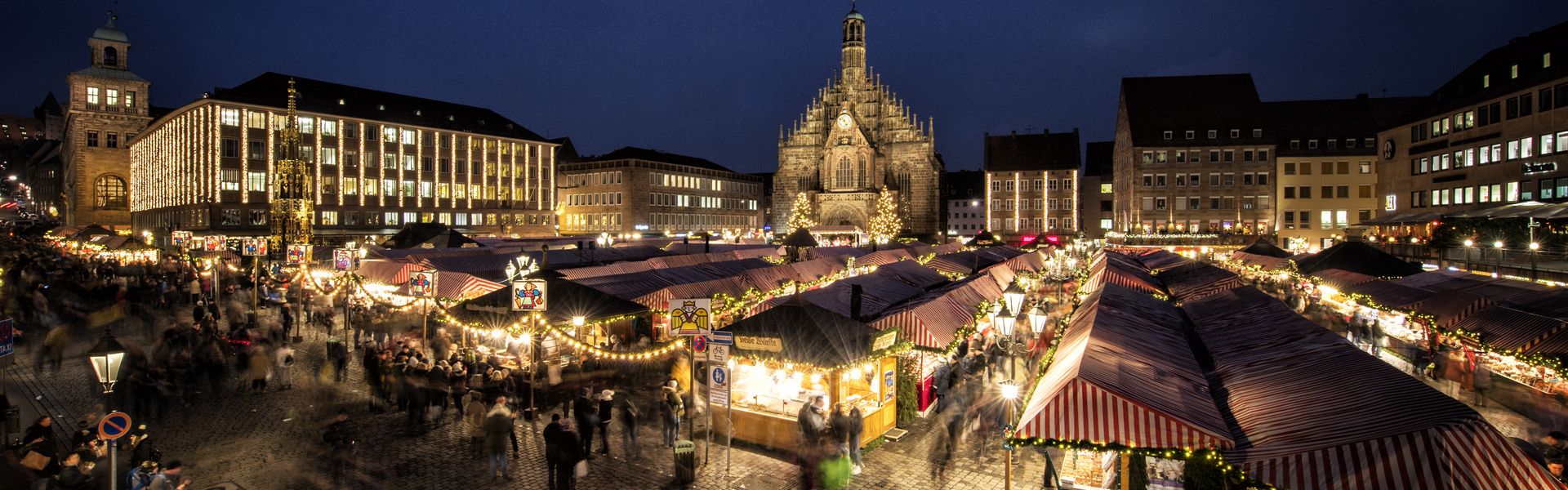
What visitors usually notice first is the visual identity. The market stalls are traditionally dressed with red-and-white roofs, creating a scene that feels instantly festive without seeming overly commercial. The setting in and around the Hauptmarkt gives the event a strong historic frame, especially with the Church of Our Lady and the surrounding old-town character adding scale and atmosphere.
It is also known for the figure of the Christkind, who remains one of the most distinctive parts of Nuremberg’s holiday tradition. Official tourism materials highlight that the Christkind opens the market and that the role is deeply tied to the city’s festive identity. This is one of those details that elevates the market from a seasonal shopping zone into something more ceremonial and rooted. :contentReference[oaicite:2]{index=2}
Food is a major part of the reputation too. Nuremberg gingerbread, classic bratwurst, mulled wine, and other seasonal treats are not side attractions here. They are central to the experience. Shopping also matters, but in the best version of the trip, food, mood, and tradition are what stay with you longest.

Best Time to Visit in 2026
For 2026, the official Christkindlesmarkt runs from November 27 to December 24. Official sources also list the ceremonial opening on November 27, 2026. That gives travelers a clear seasonal window, but choosing the right days inside that window makes a big difference to the overall experience. :contentReference[oaicite:3]{index=3}
If your priority is maximum festive energy, the first week and the weekends are exciting but busy. You get stronger atmosphere, more visible crowds, and a livelier sense that the city is fully switched into holiday mode. This is ideal for travelers who enjoy movement, energy, and that classic “everyone is here” seasonal feeling.
If your priority is a more relaxed visit, weekday afternoons and evenings tend to feel more manageable. You still get the lights, the smell of food, and the essential mood, but with a little more breathing room. That matters if you actually want to browse stalls, take photos without rushing, or enjoy food without constantly navigating shoulder-to-shoulder crowds.
There is also an important difference between daytime and evening. Daylight gives you better visibility for architecture, shopping, and orientation. Evening gives you the market’s emotional peak. The lights come alive, the cold feels sharper, and the whole scene becomes more cinematic. In practice, the best strategy is not choosing one over the other. It is giving yourself enough time to experience both.
If you can stay at least one night, do it. Too many travelers reduce Christmas markets to a fast afternoon stop. Nuremberg is better when you arrive before sunset, see the market by day, stay for the illuminated hours, and then return again the next morning with a clearer head and less pressure.
How to Get There
Official market information emphasizes that Nuremberg is easy to reach by rail, air, road, and local public transportation. For most international travelers, the simplest planning logic is either to arrive directly into Nuremberg or to connect through a larger German hub and continue by train. :contentReference[oaicite:4]{index=4}
If you are already traveling within Germany, train travel is often the least stressful option. You avoid some airport friction, and you arrive closer to the city center. That is valuable in winter, especially if you are carrying luggage and would prefer to start the festive part of the trip quickly. Nuremberg’s central station gives you strong practical access to the old town and the market area.
From the station, one of the pleasures of visiting Nuremberg is that the approach into the Christmas market can feel like part of the experience. Instead of treating the transfer as a boring logistical step, it becomes the beginning of the atmosphere. This is one reason centrally located accommodation works so well here.
Travelers doing a broader Germany itinerary should plan Nuremberg as part of a smart sequence, not an isolated stop. It works especially well when paired with other southern German destinations or with a route that includes Munich, Bamberg, or Rothenburg ob der Tauber. In winter, over-complicated connections drain energy. A cleaner route gives you more emotional room to enjoy the destination.
Where to Stay
The smartest place to stay is somewhere that reduces friction. In a winter city-break built around a Christmas market, convenience is not a luxury add-on. It shapes the experience. Being near the station or within comfortable walking distance of the old town means you can drop bags, layer up properly, rest when needed, and return to the market at different times without turning everything into a long commute.
There are travelers who book farther out to save money, and sometimes that makes sense. But this is one of those destinations where an extra bit of location value often pays for itself emotionally. Winter travel has less margin for hassle. Cold weather, shorter daylight hours, and the desire to come back for evening ambiance all make central accommodation more worthwhile than usual.
Choose your stay based on trip style. If this is a festive couple’s getaway, being near the old town will feel more magical and less tiring. If it is a practical multi-city trip, station access may matter even more than charm. If you are traveling as a family, convenience and warmth matter more than chasing the “perfect” view. The best hotel is not simply the prettiest one online. It is the one that suits how you actually travel in winter.
Try to prioritize these factors: walkability, heating quality, breakfast or nearby food access, luggage convenience, and cancellation flexibility. Winter plans can change. Trains can shift. Weather can affect mood and energy. A booking that gives you some flexibility is often worth more than a flashy room photo.
What It Feels Like on Arrival
Some destinations build slowly. Nuremberg’s Christmas market gives a much quicker emotional response. The visual rhythm of the stalls, the smell of seasonal food, the dense but festive movement of people, and the historic backdrop all make an immediate impression. Even travelers who think they are “just visiting a market” usually realize within minutes that they are experiencing something larger than a normal seasonal fair.
There is also a strong sensory contrast that makes the place memorable. Cold weather outside, warmth from food stalls, glowing lights against darker winter skies, and the texture of old-town surroundings all combine to create a setting that feels almost theatrical. But unlike a staged attraction, it still feels lived-in. Locals, day-trippers, couples, families, and international tourists all share the space in a way that keeps it dynamic.
This first impression matters because it shapes how you should approach the visit. The worst way to do Nuremberg is as a box-ticking mission. The best way is to leave room for repeat loops through the market, spontaneous snack stops, pauses to simply absorb the scene, and enough time for the atmosphere to settle on you. That is when the market starts to feel meaningful rather than merely photogenic.
Best Things to Do at the Market
1. Walk the market more than once
Your first circuit is for orientation. Your second is for actual enjoyment. Your third is usually where you notice details you missed: better-looking stalls, food you skipped, decorations worth buying, or quieter corners that feel more authentic. Repetition is part of the experience, not a sign that there is nothing to do.
2. Stay through the transition from day to night
This is one of the most rewarding timing choices you can make. Daylight lets you study the setting. Evening lets you feel it. If you only come during one time slot, you miss half the emotional range of the market.
3. Watch how locals use the market
One of the easiest ways to improve your travel instincts is to observe what residents do. Where do they stand to drink? Which food stalls stay consistently busy? What do families buy? Which routes feel less hectic? The market becomes much easier to navigate when you stop moving only as a tourist and start reading the place like a real public space.
4. Treat food as part of the attraction
Do not make the common mistake of eating elsewhere and then going to the market only for photos. The culinary side is part of why the destination matters. Budget for tasting. Try more than one thing. Let the food shape the pace of your visit.
5. Shop with intention, not panic
Because the market is visually overwhelming in the best possible way, it is easy to buy the first decent ornament you see and regret it later. Take one slow initial loop. Notice craftsmanship, stall variety, and price differences. Then buy.
What to Eat and Drink
Food is where a lot of first-time visitors suddenly understand why Nuremberg has such a strong Christmas-market reputation. The visual atmosphere may get you there, but the food often becomes the emotional anchor of the trip. The best strategy is simple: arrive a little hungry, stay curious, and avoid saving all your appetite for a formal restaurant meal later.
Nuremberg Bratwurst
Official tourism sources highlight the city’s long bratwurst tradition, and it is one of the most essential things to try while visiting. Small, smoky, and deeply linked to local food culture, Nuremberg bratwurst is not just generic sausage under a stronger marketing label. It is part of the city’s culinary identity. :contentReference[oaicite:5]{index=5}
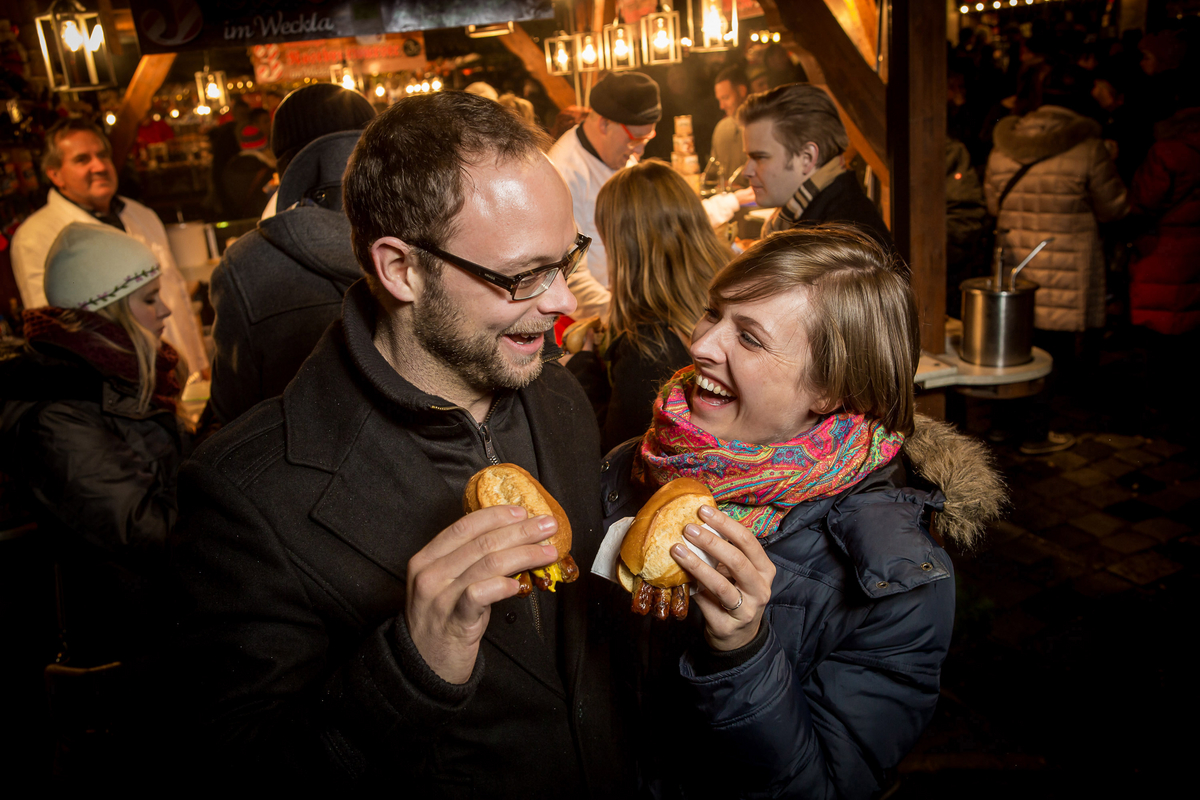
For many travelers, this becomes the perfect market food because it is warm, filling, and easy to eat while standing or walking. It suits the environment. It is not trying to be refined. It is trying to be satisfying in cold weather, and that is exactly why it works.

Glühwein
Mulled wine is more than a drink here. It acts as a seasonal social tool. It gives you a reason to pause, warm your hands, and stay in the moment. Visitors who normally are not interested in hot wine often end up appreciating it because in the context of a winter market, it simply makes sense. The smell alone already feels like part of the season.
The smartest way to enjoy glühwein is not to rush it. Pick a moment when you can actually stand still and take in the surroundings. There is a big difference between mechanically drinking it while moving through a crowd and using it as a little pause that lets the atmosphere sink in.
Lebkuchen
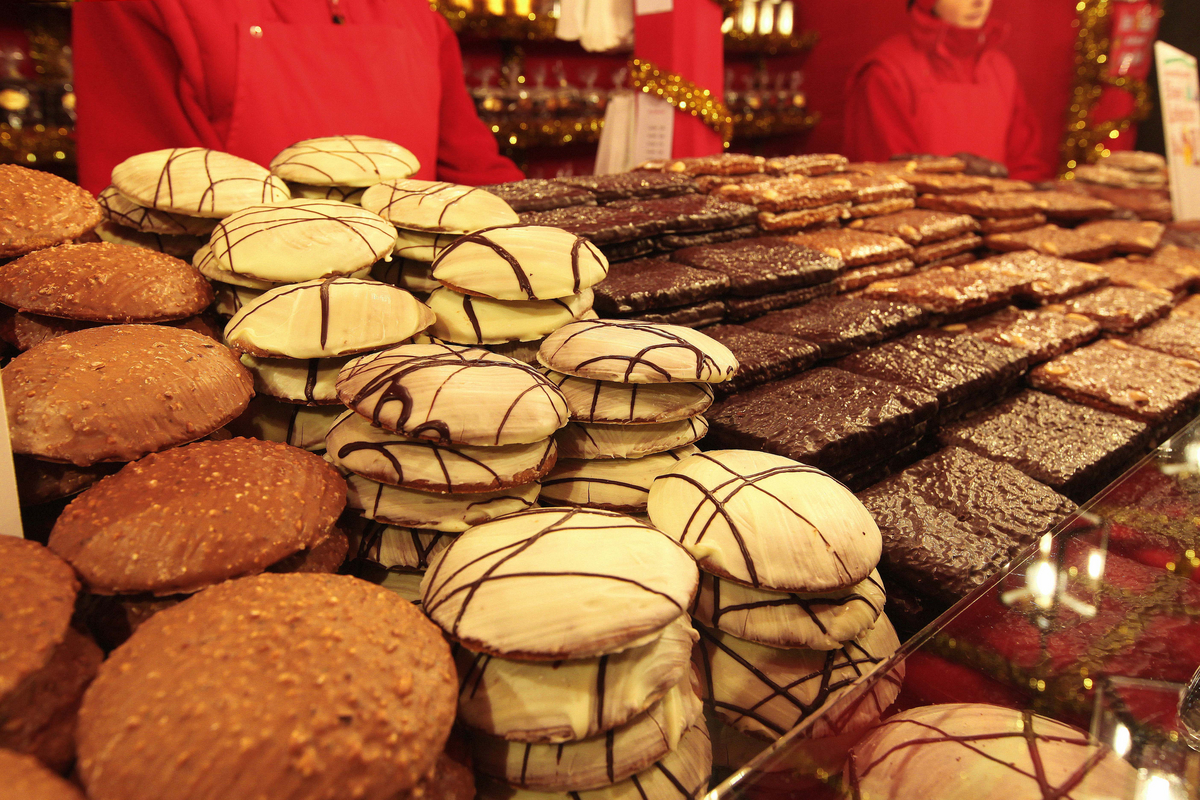
Nuremberg’s gingerbread is one of the city’s signature specialties, and official tourism materials prominently connect the Christmas season with the city’s famous Lebkuchen. If you enjoy holiday baking flavors, spice-forward sweets, or edible souvenirs, this is one of the easiest wins of the trip. :contentReference[oaicite:6]{index=6}
The mistake here is assuming all gingerbread is the same. It is worth sampling more than one style. Some are softer and richer, some are more decorative, and some are more gift-friendly than snack-friendly. Let yourself compare.
Cheese, pastries, and warm seasonal snacks
Even if you came expecting sausages and sweets, leave room for smaller discoveries. Some of the most enjoyable market moments come from something you did not plan to eat. Winter markets reward curiosity. Instead of hunting only for the “most famous” items, build a more varied tasting experience: something savory, something sweet, something warm to drink, and one impulse pick that simply smells too good to ignore.
What to Buy
Shopping is part of the pleasure of the Christkindlesmarkt, but the best purchases usually fall into one of three categories: something genuinely local, something handcrafted, or something you will still care about after the trip. A lot of travelers buy too quickly and end up with a generic decoration they could have purchased in many other places. Nuremberg deserves a little more selectiveness than that.
Official tourism pages specifically point visitors toward traditional items like glass baubles, gold-foil angels, nativity figures, and wooden decorations. Those are worth your attention because they connect your purchase to the cultural texture of the place instead of reducing it to just another souvenir market. :contentReference[oaicite:7]{index=7}
If you are buying for yourself, choose something that helps you remember the feeling of the market rather than just the fact that you were there. A handmade ornament, quality gingerbread to bring home, or a decorative item tied to Nuremberg’s Christmas traditions will usually age better than impulse novelty buys.
If you are buying gifts, think in terms of personality. Food gifts work well for people who appreciate taste and seasonal ritual. Ornaments work well for sentimental gift-giving. Decorative handcrafted items work well if you want something with more permanence. The best market purchases are usually small, meaningful, and easy to pack.

Family Trip or Romantic Getaway?
Nuremberg works well for both, but the way you plan it should change depending on who you are traveling with. As a romantic trip, it is easy to sell: evening lights, warm drinks, old-town charm, winter walks, shared snacks, and a naturally intimate seasonal mood. If that is your goal, stay central, keep your pace relaxed, and leave room for repeat visits rather than cramming the itinerary with too many other obligations.
As a family trip, the city can also work beautifully, especially if you are realistic about energy levels and timing. Children may enjoy the lights, sweets, and festive atmosphere, but they are less likely to enjoy long cold stretches of adult shopping. Build in breaks. Use daylight hours wisely. Keep expectations flexible.
Official tourism information also notes child-focused Christmas offerings in the city, which helps make Nuremberg more than a market built only for adult shoppers. That broader ecosystem strengthens its appeal for families willing to plan sensibly. :contentReference[oaicite:8]{index=8}
Mistakes to Avoid
1. Visiting only on a rushed day trip. Yes, it is possible. No, it is usually not the best version of the experience. Nuremberg benefits from an overnight stay or at least a visit long enough to include both day and evening.
2. Underestimating the cold. A Christmas market is not a museum where you can warm up easily every few minutes. You will stand, walk, and linger outdoors. Good winter layers matter more than style-forward packing.
3. Eating too little at the market. Some travelers treat market food as a snack and save their appetite for later. That misses half the point. The food is part of the destination experience.
4. Buying the first souvenir that looks decent. Do one loop first. Notice quality and variety. Then choose.
5. Planning no flexibility. Crowds, weather, and winter energy levels change how a day feels. If you overschedule, you make the trip more tiring than festive.
6. Forgetting that atmosphere is the main attraction. Do not approach the market like a shopping mall with better decorations. Slow down. Stand still sometimes. Let the place work on you.
Budget and Cost Planning Tips
Nuremberg can be done in a range of budgets, but Christmas-market travel has sneaky expenses. The problem is not usually one huge cost. It is the accumulation of smaller ones: hot drinks, snacks, sweets, gifts, transport, seasonal price bumps on accommodation, and the temptation to say yes all day long because everything feels festive.
The simplest way to stay in control is to separate your budget into categories. Keep accommodation and transport as your fixed costs. Then create a flexible “market spending” amount that covers food, drinks, and souvenirs. This stops you from mentally losing track while still allowing spontaneity.
If you are budget-conscious, you do not need to cut out the enjoyable parts. Just be strategic. Stay slightly outside the most premium old-town zone if pricing becomes unreasonable. Travel on weekdays instead of peak weekends. Focus on a few meaningful food and shopping choices rather than constant low-value impulse spending.
Also remember that winter city breaks are often more enjoyable when you pay for convenience in the right places. Saving a little on a hotel but adding more stress, longer transfers, and less flexibility is not always a real win. Sometimes the smarter budget choice is the one that protects your time and comfort.
Suggested Itineraries
One-Day Visit
Arrive by late morning, check into a central hotel or store your luggage, have a light lunch, and enter the market in the early afternoon. Spend your first pass orienting yourself and resisting the urge to buy immediately. By late afternoon, start tasting: bratwurst, mulled wine, seasonal sweets. Stay through dusk and evening for the best atmosphere, then finish with a slow final market loop before dinner or an early night.
Two-Day Stay
Day one should focus on arrival, first impressions, and the emotional side of the market. Keep it loose. Day two is for depth: better shopping decisions, more deliberate food choices, old-town wandering, and enjoying the market without the pressure of “seeing everything now.” Two days is often the sweet spot for travelers who want a richer experience without turning the trip into a long winter holiday.
Three-Day Slow Trip
If you have three days, you can stop treating Nuremberg as an event and start appreciating it as a city in Christmas mode. Use one day for the market, one for broader city exploration and museums or architecture, and one for simply revisiting favorite spots at a slower pace. This is the version of the trip that usually feels most satisfying and least rushed.
Experience-Based Advice for a Better Trip
Arrive with a clear intention. Ask yourself what kind of Christmas-market traveler you are. Are you there for food, shopping, atmosphere, photography, or a romantic winter mood? Once you know the answer, your choices become much better.
Do not chase perfection. Winter travel is shaped by weather, crowds, and mood. A little cold, a little noise, and a little unpredictability are part of what make the experience feel real.
Use the market as an anchor, not a checklist. Let it structure your day, but do not turn it into a stressful mission. The best festive trips usually leave room for drifting.
Photograph less than you think. Take your pictures, but do not let the whole visit become content capture. Some of the best moments are the ones where your hands are around a warm mug and you are not looking through a screen.
Keep your evenings open. Christmas markets often feel most magical after your “main plan” is technically over. The trip improves when you are free to linger instead of constantly moving toward the next booking.
Buy one thing you really care about. Not ten forgettable items. One genuinely meaningful object often carries the memory of the trip better than a bag full of rushed purchases.
FAQ
Is Nuremberg Christmas Market worth visiting in 2026?
Yes. If you want one of the most historically recognized and atmospherically strong Christmas markets in Germany, Nuremberg remains a top choice. Official listings confirm the 2026 season, which makes it an easy destination to plan ahead. :contentReference[oaicite:9]{index=9}
How many days do you need?
One full day is enough for a basic experience, but two days is much better. It gives you time to enjoy the market without turning everything into a rush.
Is it good for first-time Germany travelers?
Very much so. It is accessible, visually memorable, rich in atmosphere, and easy to understand even if you know little about German Christmas traditions beforehand.
What should you definitely try?
Bratwurst, glühwein, and Lebkuchen are the easiest essential trio. After that, let curiosity guide you.
What is the biggest planning mistake?
Trying to do it too quickly. The market is better when you leave room for atmosphere, not only activity.
Final Thoughts
Nuremberg’s Christmas market earns its reputation not because it is loud or trendy, but because it feels complete. It brings together history, food, ritual, city character, and winter atmosphere in a way that feels coherent rather than staged. That coherence is what makes the trip satisfying.
If you plan it well, the experience is not just about wandering between stalls. It becomes one of those rare travel memories built out of many small pleasures: warm food in cold weather, beautiful lights against dark skies, meaningful gifts, festive sounds, and the simple feeling of being exactly where the season makes the most sense.
For travelers building a Europe winter trip in 2026, Nuremberg is not merely a famous stop to check off. It is one of the places where Christmas market culture feels most rooted, most recognizable, and most rewarding when approached with enough time and intention. Come hungry, come layered up, come ready to walk slowly, and let the city do what it has clearly been doing for generations — welcome people into a very particular kind of holiday mood.


