

- Why Canada Works for Solo Women
- Best Destinations by Travel Style
- Is Canada Safe? Honest Assessment
- Planning Tips Before You Book
- Getting Around Without Stress
- Honest Budget Breakdown
- What to Wear & What to Pack
- Mistakes to Avoid
- Itinerary Ideas for Every Length
- Real-World Advice Nobody Writes
- Frequently Asked Questions
- Final Thoughts
Why Canada Works So Well for Solo Female Travel
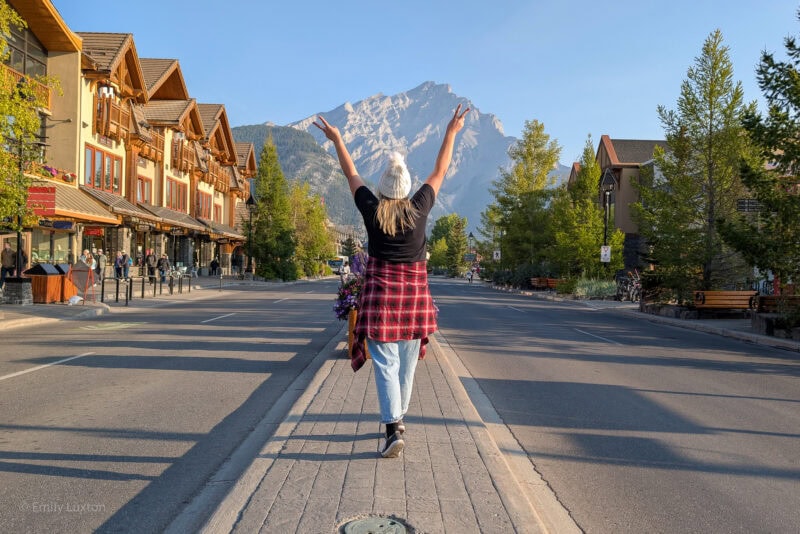
Canada keeps showing up near the top of solo female travel lists — not because of clever marketing, but because it earns it. The country solves a specific problem that other beautiful destinations struggle with: it gives you world-class scenery alongside a culture and infrastructure that actually supports independent movement.
Most solo travel fears fall into one of two categories — interpersonal safety and logistical overwhelm. Canada handles both reasonably well. It is a country where you can arrive alone at a hotel, eat solo at a restaurant, fill a tank at a rural gas station, or join a day tour without anyone making it strange. That social normality matters more than most travel articles admit.
What makes Canada especially compelling for women is the range of trip types it supports. You can do a city break that stays within a 10-block radius and never needs a car. You can do a road trip through national parks with 500-kilometer driving days. You can do a coastal slow-travel loop. The country does not force you into one type of experience — and that flexibility is everything when you are making all the decisions yourself.
One underrated quality: Canada is emotionally uncomplicated in the way that matters most for solo travel. You are not spending energy managing unwanted attention, interpreting ambiguous social situations, or negotiating basic services. That cognitive space goes back to actually enjoying the trip — noticing the light on the mountains, lingering in a café, driving without a knot in your stomach.
The one caution that belongs at the start of this guide: Canada is vast and expensive. Those two facts shape everything. The travelers who struggle here are usually the ones who underestimate distance, overpack the itinerary, and then hit budget problems when plans shift. The travelers who thrive come in with realistic expectations, a focused itinerary, and a willingness to choose depth over coverage.
Best Places in Canada for Women Traveling Alone
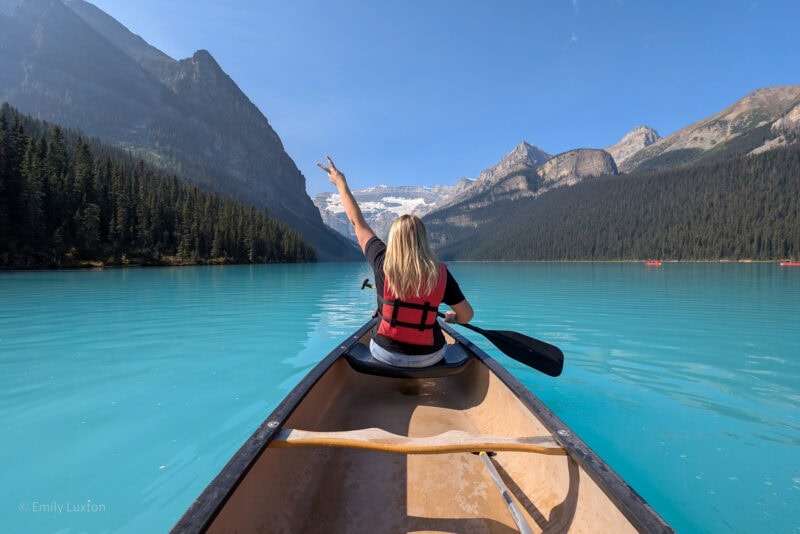
The biggest planning mistake is treating Canada as a single destination. It is five or six completely different travel experiences stitched together by a national border. Where you go determines your budget, your transport needs, your packing list, and how the trip feels emotionally. Choose based on your actual travel style, not the most photographed destination on Instagram.
🏔 Banff & Jasper, Alberta
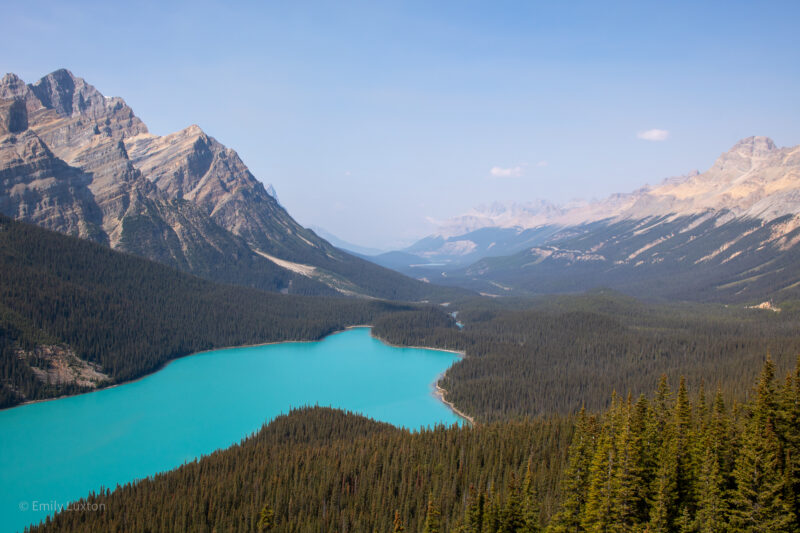
The iconic lake-and-mountain corridor. Visually dramatic, well-developed for tourism, excellent for road trips. Busy in July–August. Book accommodation early.
Best for: nature lovers & road trippers🌊 Vancouver, BC
City meets wilderness. Walk in Stanley Park, take a seawall sunset run, then day-trip to Whistler. Expensive but easy to navigate solo. Great food scene.
Best for: balance of urban + outdoor🏙 Toronto, Ontario
Multicultural, walkable by neighborhood, excellent public transport. Great for first-time solo travelers who want the energy of a big city with lots of structure.
Best for: first solo trips, culture🥐 Montréal, Québec
French-inflected food culture, incredible restaurant scene, beautiful architecture, and a walkable plateau lifestyle. Warmer and more playful than Toronto.
Best for: food, culture, atmosphere🦞 Atlantic Canada
Nova Scotia, PEI, New Brunswick. Slower pace, coastal beauty, seafood, and genuinely warm communities. Undervisited and deeply rewarding with a car.
Best for: slow travel & scenic drives🌿 Victoria, BC
Small enough to feel manageable, beautiful enough to feel worthwhile. Whale watching, afternoon tea, cycle routes, and a strong café culture. Excellent for introverts.
Best for: slower pace, introvert-friendly| Destination | Trip Vibe | Car Needed? | Main Watch-Out |
|---|---|---|---|
| Banff & Jasper | Adventure, iconic scenery | Yes, strongly recommended | Costs spike fast; weather changes quickly |
| Vancouver | Relaxed, modern, walkable | No — city transit is solid | Accommodation is expensive |
| Toronto | Energetic, diverse, practical | No — TTC covers most areas | Over-scheduling in a big city drains energy fast |
| Montréal | Cultural, stylish, foodie | No — very walkable | Winters are severe; research neighborhood safety at night |
| Atlantic Canada | Calm, scenic, slow | Yes — transit is very limited | Shoulder season can mean limited opening hours |
Is Canada Safe for Solo Female Travelers? An Honest Assessment
The short answer: yes, Canada is genuinely one of the safer countries in the world for solo female travel. The longer answer: "safe" has two very different meanings here, and understanding both will make your trip better.
Human safety in cities
Canada's major cities are comparatively low-risk for solo women by global standards. Violent crime targeting tourists is rare. Street harassment exists but is not a defining feature of urban movement the way it is in some destinations. You can walk freely in daytime, use public transit, eat solo without incident, and generally move through city life without constant alertness.
The standard urban caution still applies: avoid poorly lit, empty areas late at night. Be aware of your surroundings near transport hubs. Use rideshare instead of walking unfamiliar neighborhoods after midnight. Keep valuables discreet. None of this is Canada-specific — it is just sensible solo female travel practice anywhere.
Environmental safety in wilderness
This is where many women underestimate the risk. Canada's outdoors can be breathtaking and brutal in equal measure. Weather in mountain regions changes without warning. Bear encounters are real — not theoretical. Trail signage in popular parks can be excellent, but conditions after a storm can be dangerous even on marked routes. Signal disappears fast once you leave main roads.
The risk is not other people. It is nature. Treat it with genuine respect.
Solo female safety checklist
- Choose accommodation with strong, recent reviews — not just attractive photos
- Arrive at new destinations before dark, especially in smaller towns
- Keep a backup payment card separate from your main wallet
- Share your daily itinerary with someone at home when doing wilderness days
- Download offline maps before heading into areas with limited signal
- Carry bear spray in Alberta and BC backcountry — and know how to use it
- Register your hike at national park visitor centers when going solo
- Dress for temperature drops, not just the morning forecast
- In cities: use licensed rideshare rather than walking late at night alone
- Trust the low-level internal signals that tell you a situation feels off
Travel Planning Tips Before You Book
Canada rewards preparation. Not in a way that removes spontaneity, but in a way that gives spontaneity a solid frame. The mistakes that derail Canadian solo trips — bad accommodation, missed park reservations, underestimated distances — are almost always planning failures, not bad luck.
Start with your travel personality, not a map
Before you open a booking site, ask yourself: Do I want movement or stillness? City energy or wilderness quiet? A trip that looks impressive or one that actually feels good? Answering that first produces a far sharper itinerary than starting with "what are the top 10 things to see."
Choose the right season for you specifically
June–September is the easiest window for most solo travelers. Daylight is generous, roads are open, and infrastructure is fully running. September specifically is underrated — crowds thin and fall color begins in the Rockies. Winter can be magical, but factor in road conditions, reduced daylight, and stronger gear requirements. Spring is unpredictable: some regions shine, others are still cold and muddy.
Reserve the critical pieces early
Banff in July without reservations is a gamble you will lose. Popular national park accommodations and campsites book months ahead. Same with Via Rail trains on scenic routes. If you know when you are going, book accommodation and key transport first, then build the rest around it.
Build in buffer days
Canada's weather can shift a full day's plan. So can a transport delay, a long drive that went sideways, or simply the feeling of not wanting to leave a place you love. A buffer day is not wasted — it is the difference between a trip that flows and one that constantly feels behind.
Before you fly: the offline prep list
- Download maps offline (Google Maps or Maps.me) for every region you are visiting
- Save booking confirmations, accommodation addresses, and emergency contacts offline
- Get a local SIM or activate an eSIM before or immediately upon arrival
- Check entry requirements — Canadian eTA for many nationalities, US passport holders need ID
- Get travel insurance that covers trip disruption, medical, and outdoor activity
- Check if you need an International Driving Permit for your rental car
Getting Around Canada Without Stress
Transport in Canada is the part of planning that trips up most first-timers, because the instinct is to import assumptions from smaller countries. Canada does not work like Europe. A distance that looks like a day trip on a map may be a six-hour drive. The rule is simple: always check actual travel times, not just distances.
City transport (no car needed)
Vancouver's SkyTrain, Toronto's TTC, and Montréal's metro are all reliable, safe, and cover most solo travel needs. In cities, a combination of transit and occasional rideshare (Uber operates in all major Canadian cities) handles almost everything. You genuinely do not need a car if your whole trip is city-based.
Intercity travel
Via Rail's Canadian train between Toronto and Vancouver is one of the great scenic rail journeys — but it takes multiple days and requires booking well in advance. For most intercity connections, flying is fastest and can be surprisingly affordable if booked early. Flixbus and regional bus services work on some corridors but are not the nationwide network you might be used to in Europe.
Road trips in scenic regions
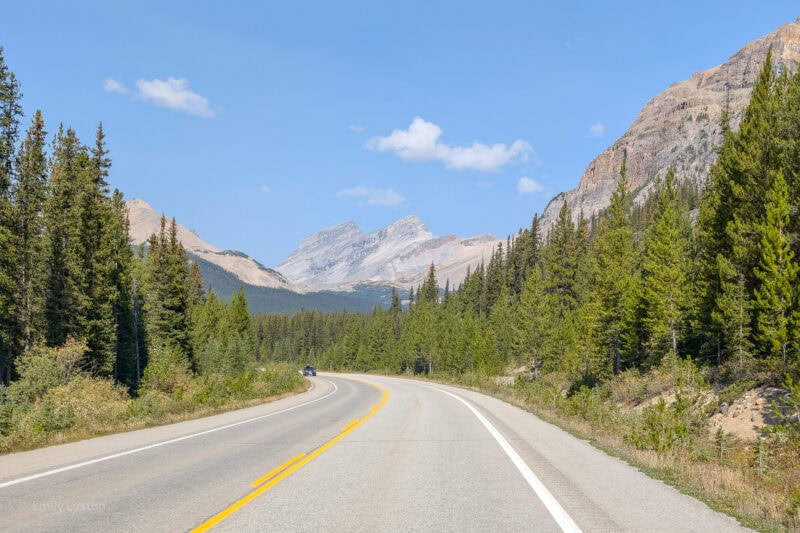
For Banff, Jasper, Atlantic Canada, and the BC interior — a rental car transforms the experience. It gives you freedom to stop at a viewpoint without worrying about a tour bus schedule, to arrive before the crowds, to change plans when the weather shifts. For solo female travelers specifically, this kind of autonomy can make the trip feel genuinely empowering rather than contingent on group timing.
Practical rental car notes for solo women
- Book through a major agency (Enterprise, Avis, Hertz) — not just price comparison sites that show smaller operators without clear cancellation policies
- Confirm that your personal credit card covers Collision Damage Waiver (CDW) before paying for it at the counter — many do
- In mountain regions, request an all-wheel-drive vehicle, especially outside peak summer
- Download offline maps and a fuel tracking app — some mountain stretches have long gaps between gas stations
- Driving in Canada is generally straightforward if you are used to right-hand traffic
Honest Budget Breakdown for Solo Female Travelers
Let's be direct: Canada is an expensive destination, and solo travel makes it sharper because you cannot split accommodation, car rental, or fuel. Pretending otherwise leads to financial stress mid-trip, which is one of the fastest ways to ruin a solo journey. The better approach is honest budgeting from the start.
| Budget Level | Daily Range (CAD) | What This Looks Like |
|---|---|---|
| Budget | $80–120/day | Hostel dorms, grocery meals, free activities, limited tours, public transit only |
| Mid-range | $150–250/day | Private hotel/guesthouse room, mix of restaurants and grocery, rental car in nature regions, 1–2 paid activities per stay |
| Comfort | $300–450/day | Boutique hotels, dining out regularly, guided experiences, flexible itinerary with upgrades |
Where solo travelers consistently overspend
- Accommodation in peak season — Banff in July is eye-watering. Book early and consider Canmore (15 min away) as a cheaper base.
- Last-minute rental cars — prices can triple in high-demand periods. Book as soon as your dates are fixed.
- Restaurants in national park towns — food is expensive when you are captive. Pack lunch for driving days.
- Convenience spending — coffees, airport snacks, data top-ups. These quietly add up to CAD $20–30/day.
- Activity FOMO — booking every tour because you feel like you should. One great experience per region beats five average ones.
Smart savings that do not hurt the trip
- Buy a Parks Canada Discovery Pass if visiting multiple national parks — it pays for itself quickly
- Book accommodation in adjacent towns to famous parks (Canmore near Banff, Hinton near Jasper)
- Use grocery stores for breakfasts and packed lunches on driving days
- Travel in June or September — better prices than July–August, similar experience quality
- Use a no-foreign-transaction-fee credit card to avoid charges on every purchase
What to Wear & What to Pack for Canada
Packing for Canada is a function exercise, not a fashion one. The country has extreme temperature ranges depending on season and region, and several of its best experiences happen outdoors in variable conditions. The travelers who pack well arrive ready for the trip they are actually having, not the trip that looked good on a mood board.
The layering system that works
Rather than packing for one type of weather, build a layering system: a moisture-wicking base, a warm mid-layer (fleece or light down), and a waterproof/windproof outer shell. In summer, the mid-layer may live in your bag most of the time, but you will be grateful to have it at elevation or on a boat tour.
Footwear — the most common mistake
Do not bring shoes you have not broken in. Canada involves a lot of walking, often on uneven ground, often for longer than planned. A pair of comfortable, already-worn walking shoes will do more for your trip quality than any outfit choice. If you plan to hike, even casually, proper hiking shoes are worth the bag space.
Packing list by category
- Walking shoes (already broken in) + one casual pair for evenings
- 2–3 base layer tops (merino wool dries fast and doesn't smell)
- Warm mid-layer (fleece or packable down jacket)
- Waterproof outer jacket with hood
- Comfortable trousers for travel/outdoor days + one versatile dress or smart casual option
- Compact day pack that closes securely (zips, not open tops)
- Reusable water bottle (tap water in Canada is safe to drink everywhere)
- Portable power bank (essential on long driving or hiking days)
- Bear spray if you plan to hike in Alberta or BC — buy in Canada, do not fly with it
- Sunscreen and lip balm — mountain sun at elevation is stronger than it feels
- Medication kit including antihistamines and blister plasters
Mistakes to Avoid When Traveling Solo in Canada
Most Canada mistakes are not dramatic. They are quiet planning errors and mindset issues that slowly erode the quality of the trip. Here are the ones that come up most often — and how to sidestep them.
1. Trying to see the whole country in one trip
Canada is 10 million square kilometers. Banff to Montréal is a 5-hour flight. Many first-time visitors try to link three or four regions in under two weeks and end up spending the trip in transit rather than in the places. Choose one or two regions and go deeper. You will remember more.
2. Underestimating drive times
Something that looks like an hour and a half on Google Maps in June may take three hours in a traffic bottleneck near a popular park or after a surprise weather delay. Never plan back-to-back driving days without buffer time between them.
3. Booking accommodation too late in high-demand areas
Banff in July and Tofino in August are full. If you have confirmed dates, book accommodation as soon as they are fixed — weeks or months before your trip, not days before. Late booking often means paying premium prices for poor-location options.
4. Treating famous parks as fully beginner-proof
Popular does not mean easy. Weather changes, wildlife is real, signal drops, and some "easy" trails become genuinely difficult after a season of erosion. Research conditions before every significant outdoor day. Parks Canada's website has up-to-date trail information for most popular areas.
5. Packing for the photos, not the experience
If your shoes hurt at hour two, the view at hour four stops mattering. Prioritize function. Layering works better than a full suitcase. Canada's style culture is casual — no one is judging your technical jacket at a lake viewpoint.
6. Scheduling every single day to maximum capacity
The most consistent feedback from women who have done Canada solo: the best moments happened on the half-days they had not planned. Stillness at a lake. A second coffee somewhere beautiful. A spontaneous drive down a side road that turned out to be stunning. A rigidly packed schedule kills that. Leave room.
Itinerary Ideas for Every Trip Length
These are frameworks, not rigid scripts. Adapt them to your pace, interests, and the season you are traveling. The principle across all of them: fewer bases, deeper experience, buffer days included.
7-Day Best of BC: Vancouver + Banff Intro
10-Day East Coast Culture: Toronto + Montréal
3 nights Toronto (neighborhoods, CN Tower, day trip to Niagara Falls) → train to Montréal (3 hours, Via Rail) → 4 nights Montréal (Plateau, Old Port, Mount Royal, food and café culture) → 2 buffer/flex days. Best without a car — both cities reward walking and transit.
8-Day Atlantic Canada Slow Drive
Fly into Halifax, Nova Scotia. Drive the Cabot Trail in Cape Breton (2–3 days). Ferry to PEI if timing allows. Return to Halifax via the South Shore. This itinerary rewards slow pace and spontaneity — it is less Instagram-dramatic and more genuinely restorative. Best in July–September when coastal weather cooperates.
Real-World Advice Nobody Else Writes
This section is not about places. It is about how to move through the trip better — the things that actually separate a good solo experience from a great one.
Solo confidence does not always feel brave. It often looks like quietly checking in, asking a hotel front desk for their safety advice, skipping a plan that no longer feels right, or taking a cab instead of walking a route you are unsure about. That is not weakness — that is good judgment, which is the actual definition of solo confidence.
Let Canada slow you down. The country rewards stillness in a way that is hard to anticipate. Some of the strongest moments happen not at the famous viewpoints but at the second cup of coffee in a quiet town, the unexpected roadside stop, the evening you stayed in a lake-view room and did nothing. If your schedule leaves no room for that, you are missing what Canada does best.
Protect your energy deliberately. Solo travelers carry everything — logistics, navigation, decision fatigue, emotional processing. Build in evenings where you do not have to go anywhere, choose anything, or be social. Room service, takeout, and a good book are not trip failures. They are part of how you sustain a solo trip for longer than four days without wearing yourself out.
Use tours where they genuinely add value. A guided whale-watching tour from Victoria, a helicopter flight over the Rockies, a guided hike in a bear-dense area — these add something real. A bus tour of a city you could walk yourself just adds structure you did not need. Choose activities based on whether they open something up, not because you are afraid to move independently.
Your trip is not a content production. Canada is one of the most photographed destinations in the world. It can create a subtle pressure to optimize your itinerary for images rather than for how the trip actually feels. The people who describe their Canada trips as life-changing are almost always the ones who made decisions based on what they wanted to experience, not what would look good.
Frequently Asked Questions
Answers to the questions that solo female travelers ask most often — written to be genuinely useful rather than generic.
Final Thoughts
Canada is not a destination that rewards people who try to see everything. It rewards people who choose something specific and commit to it fully — whether that is a week in the Rockies, a slow coastal drive through Nova Scotia, or four days eating their way through Montréal.
For solo female travelers, Canada offers something genuinely valuable: a destination large enough to feel like a real adventure, stable enough to feel manageable, and beautiful enough to create the kind of moments that stay with you. The size and the cost and the wilderness are not obstacles. They are part of what makes arriving there, alone, on your own schedule, feel like something worth doing.
Come in with honest expectations. Plan for your real self, not your aspirational one. And give yourself permission to slow down when something feels worth staying in longer. That is usually when Canada becomes what people mean when they say it changed them.


